
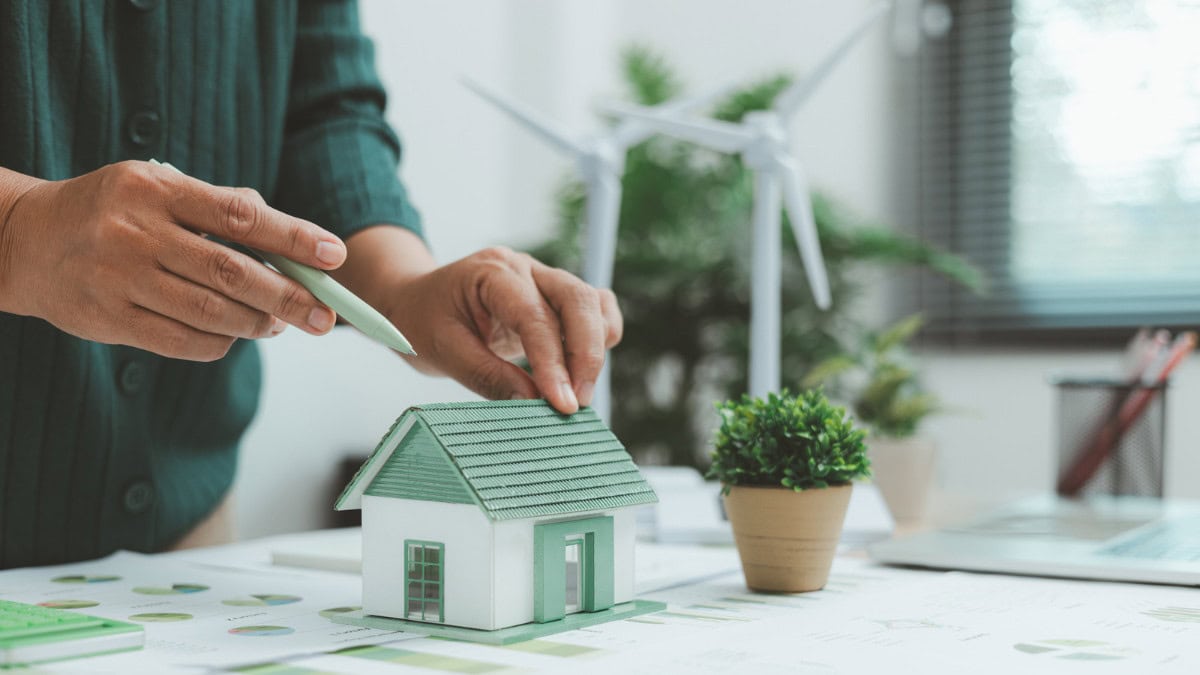
Luxury living and sustainability might once have seemed like unlikely partners. After all, can a home with expansive glazing, beautiful natural materials, generous living spaces and high-end finishes really be environmentally responsible? The answer is yes. With thoughtful design, the right construction methods and a focus on long-term performance, an eco-friendly house build can offer exceptional comfort, outstanding aesthetics and impressive energy efficiency.
When you picture a luxury home, what comes to mind? Perhaps a spectacular open-plan kitchen, floor-to-ceiling windows overlooking the countryside, beautifully crafted interiors or a spa-inspired bathroom.
Now picture that same home staying comfortably warm through a Yorkshire winter without constantly relying on the heating. Imagine rooms filled with natural light, excellent indoor air quality and energy bills that are considerably lower than you might expect for a property of its size.
This is the exciting direction in which luxury homebuilding is heading.
At Precision Builders, we believe exceptional design and environmental responsibility can complement one another. As experienced sustainable home builders in Sheffield, we work with homeowners and architects to create bespoke properties that combine outstanding craftsmanship with energy-conscious construction.
So, what does it actually take to build a luxury home that's genuinely eco-friendly?
There's a common misconception that environmentally friendly homes involve sacrifice. Perhaps you imagine smaller rooms, limited glazing, basic finishes or compromising on the architectural features you've always wanted.
Fortunately, sustainable construction has moved well beyond those stereotypes.
Today's high-performance building materials, innovative construction techniques and renewable technologies make it possible to create homes that are both architecturally impressive and highly energy-efficient.
In fact, many features associated with sustainable homes are also desirable luxury features.
Excellent insulation creates consistently comfortable temperatures. High-performance glazing allows beautiful views without excessive heat loss. Carefully designed ventilation provides fresh, filtered air. And quality materials can deliver timeless elegance while reducing the need for frequent replacement.
The result is a home that doesn't simply look luxurious. It feels luxurious to live in.
The important distinction is that true sustainability begins with how a home is designed and constructed, rather than simply adding a few environmentally friendly features towards the end of a project.
Solar panels and heat pumps tend to attract the headlines when people discuss eco-friendly houses. They're valuable technologies, but they're only part of the story.
One of the most important principles of sustainable construction is to reduce the amount of energy a building needs in the first place.
This is often described as a fabric-first approach.
Rather than installing increasingly powerful heating systems to compensate for heat escaping through walls, roofs, windows and gaps, the aim is to construct a building that retains warmth exceptionally well.
This involves careful consideration of:
These details might not be as immediately exciting as choosing a marble worktop or a statement staircase, but they have an enormous influence on how comfortable and efficient your home will be for decades.
And importantly, they don't need to affect the appearance of your finished property.
One of the most interesting developments in sustainable home building is the growing use of Passivhaus principles.
Passivhaus is an internationally recognised approach to designing and constructing buildings that require very little energy for heating and cooling.
The emphasis is on exceptional insulation, airtightness, high-performance windows, minimising thermal bridges and carefully controlled ventilation.
The result can be a home with remarkably stable internal temperatures, reduced heating requirements and excellent comfort throughout the year.
But does that mean sacrificing architectural ambition?
Absolutely not.
Our project at Ringstead Crescent in Crosspool demonstrates how energy-conscious construction and beautiful architecture can work together.
Working alongside HEM Architects, we delivered a three-storey, low-energy new build designed to Passivhaus standards, featuring open-plan living spaces, three en-suite bedrooms and spectacular views across the Rivelin Valley.
View our Ringstead Crescent project
The project illustrates an important point: energy efficiency doesn't have to dictate a home's architectural style. With the right expertise, it can become an integral part of an ambitious design.
It's worth noting that a home designed to Passivhaus standards is not necessarily certified as a Passivhaus. Formal certification involves independent checks and performance verification.
Large expanses of glass are a defining feature of many contemporary luxury homes.
They create a connection between indoors and outdoors, frame beautiful views and allow natural light to flood into living spaces.
But glass can also be a significant source of heat loss in winter and overheating in summer.
Does that mean an eco-friendly house should have tiny windows?
Not at all. It simply means glazing needs to be considered carefully.
Modern double and triple-glazed systems can offer excellent thermal performance, particularly when combined with insulated frames and professional installation.
However, the position, size and orientation of the windows are just as important as the glazing specification.
South-facing windows, for example, can help capture useful solar warmth during colder months. Without suitable shading, though, they can also contribute to uncomfortable summer temperatures.
Thoughtful architectural design might incorporate roof overhangs, external blinds or carefully positioned shading to balance these effects.
The objective is to enjoy the benefits of expansive glazing without creating a property that's expensive to heat or uncomfortable during warmer weather.
Luxury is about being able to enjoy those spectacular views in comfort, whatever the season.
Sustainable construction isn't simply about how much energy a home consumes. It's also about the environmental impact of the materials used to build it.
This is where things become particularly interesting for homeowners who appreciate craftsmanship and quality.
Natural stone, responsibly sourced timber, reclaimed materials and carefully selected brickwork can all contribute to a distinctive architectural finish.
However, it's important to recognise that a material isn't automatically sustainable simply because it's natural.
Its environmental impact depends on several factors, including where it comes from, how it's manufactured, how far it travels, how long it lasts and what happens to it at the end of its life.
For example:
Responsibly sourced timber can be an attractive option for structural elements, cladding and interior finishes. Certification schemes such as FSC and PEFC can help identify timber from responsibly managed sources.
Reclaimed brick and stone can introduce character while reducing demand for newly manufactured materials, provided they're suitable for their intended use.
Durable, high-quality finishes may cost more initially but can reduce the need for replacement, repairs and refurbishment over time.
Locally sourced materials can sometimes reduce transport impacts and help a new property complement the surrounding landscape.
The key is to consider materials in the context of the entire building rather than treating sustainability as a checklist.
A beautifully constructed home that's designed to last for generations can be a far more responsible investment than one filled with fashionable finishes that need replacing every few years.
Once the building itself has been designed to minimise energy demand, technology can help reduce its environmental impact further.
And the good news is that many of these systems fit seamlessly into a luxury home.
Air source heat pumps extract heat from outside air and transfer it into a property's heating and hot water systems.
When correctly designed and installed, they can provide efficient heating, particularly in well-insulated homes.
They can also work effectively with underfloor heating, which is already a popular feature in high-end residential properties.
Imagine walking barefoot across a beautifully finished stone floor on a cold January morning and feeling gentle, even warmth beneath your feet.
That's an example of sustainable technology contributing directly to everyday luxury.
Solar photovoltaic panels generate electricity from sunlight, helping reduce the amount of electricity a home needs to purchase from the grid.
When combined with battery storage, some of that electricity can be saved for use later in the day.
The potential benefits depend on roof orientation, shading, system size and household electricity consumption, but solar technology can make a valuable contribution to a lower-energy home.
Smart technology can also help homeowners manage energy use more intelligently.
From zoned heating controls and automated lighting to monitoring electricity consumption, these systems can provide greater control over how a property operates.
However, smart technology works best when it supports an already efficient building. It cannot compensate for poor insulation or inadequate construction detailing.
This is an important question, and one that deserves an honest answer.
Even a home that uses very little energy once completed has an environmental footprint associated with its construction.
Producing materials such as concrete, steel, bricks and glass requires energy. Transporting products to site creates emissions, and construction itself generates waste.
These impacts are often described as embodied carbon, in contrast with the operational carbon associated with running the building.
For a genuinely eco-friendly house build, both need consideration.
Practical ways to reduce construction-related impacts can include:
There will sometimes be trade-offs. A particular material might have a higher initial environmental impact but offer greater durability or better long-term performance.
The aim isn't to pretend that building has no environmental impact. It's to make informed decisions that reduce that impact while delivering a home that performs exceptionally well.
Building from scratch isn't always the only route to a beautiful, energy-conscious home.
For some homeowners, extending and refurbishing an existing property can be an excellent alternative.
Retaining a sound existing structure can avoid some of the environmental impacts associated with demolition and replacement. Meanwhile, carefully planned improvements can transform how the property looks, feels and functions.
Upgraded insulation, improved glazing, efficient heating systems and thoughtfully designed extensions can all contribute to a more comfortable home.
And the finished result can be every bit as impressive as a completely new property.
At Chandler Grove, we transformed an existing family home through substantial side and rear extensions, internal alterations and a comprehensive refurbishment.
The result is a spacious, contemporary home featuring an enlarged kitchen and dining area, stylish finishes and a stronger connection with the garden.
The homeowner also highlighted the sustainable and stylish materials used in the project.
View our Chandler Grove transformation
Of course, whether refurbishment or replacement is environmentally preferable depends on the condition of the existing property, the extent of the proposed work and the performance of the finished building.
But it's certainly worth exploring both possibilities before making a decision.
It's one of the first questions homeowners ask, and understandably so.
Some sustainable construction measures involve higher upfront costs. High-performance glazing, additional insulation, specialist airtightness detailing and renewable technologies can all influence the initial budget.
However, focusing exclusively on construction costs can give a misleading picture.
A home is a long-term investment, and its running costs, maintenance requirements and overall comfort matter too.
An energy-efficient property may offer:
That doesn't mean every environmentally friendly feature will automatically pay for itself. Some decisions are made primarily for comfort, resilience or environmental reasons rather than financial savings.
The most sensible approach is to establish priorities early, assess the costs and benefits of different measures, and create a realistic budget.
For luxury self-build projects, getting these decisions right at the design stage can help avoid expensive alterations later.
Creating a genuinely sustainable luxury home requires more than attractive architectural drawings and an ambitious specification.
The quality of construction is critical.
Even excellent insulation can underperform if it's installed poorly. Small gaps in an airtightness layer can undermine the intended performance of a building, while poorly detailed window installations can create cold spots or moisture problems.
And when you're investing in premium materials and bespoke architectural features, the quality of the workmanship becomes even more important.
This is why collaboration between the homeowner, architect and construction team is so valuable.
Experienced builders can help identify potential issues before work begins, recommend practical solutions and ensure that the architectural vision is delivered without losing sight of energy performance.
At Precision Builders, we've spent more than four decades building and renovating homes across Sheffield, Yorkshire and the surrounding areas.
Our experience encompasses bespoke new builds, high-quality extensions and comprehensive property refurbishments, including projects designed around low-energy construction principles.
We understand that a luxury home needs to be more than visually impressive. It must be beautifully constructed, comfortable to live in and designed to stand the test of time.
You can explore more examples of our work in our recent projects portfolio.
Absolutely. But the most successful sustainable homes aren't necessarily the ones with the greatest number of green gadgets or the most expensive technology.
They're the ones where environmental performance has been considered from the very beginning.
Where beautiful architecture works with the building's surroundings. Where materials are chosen for quality, durability and environmental impact. Where energy efficiency is built into the structure itself. And where every detail contributes to a home that's comfortable, practical and a pleasure to live in.
It's also important to recognise that no new build is entirely without environmental impact. Genuine sustainability involves understanding those impacts, making thoughtful choices and looking beyond marketing claims.
The exciting thing is that none of this needs to come at the expense of luxury.
In many ways, a home that stays warm in winter, remains comfortable in summer, provides fresh air and uses energy intelligently represents the ultimate luxury.
If you're considering an eco-friendly house build in Sheffield, Yorkshire or North Derbyshire, Precision Builders can help bring your vision to life.
As experienced sustainable home builders in Sheffield, we combine traditional craftsmanship with modern construction techniques to create exceptional homes tailored to individual lifestyles.
Whether you're planning an architect-designed new build, exploring Passivhaus principles or considering a substantial renovation, we'll work closely with you and your design team to deliver a property that combines beauty, performance and lasting quality.
Discover more about our bespoke new build homes or contact Precision Builders to discuss your project.
Because a truly exceptional home shouldn't just look beautiful today. It should be built for tomorrow.
"*" indicates required fields